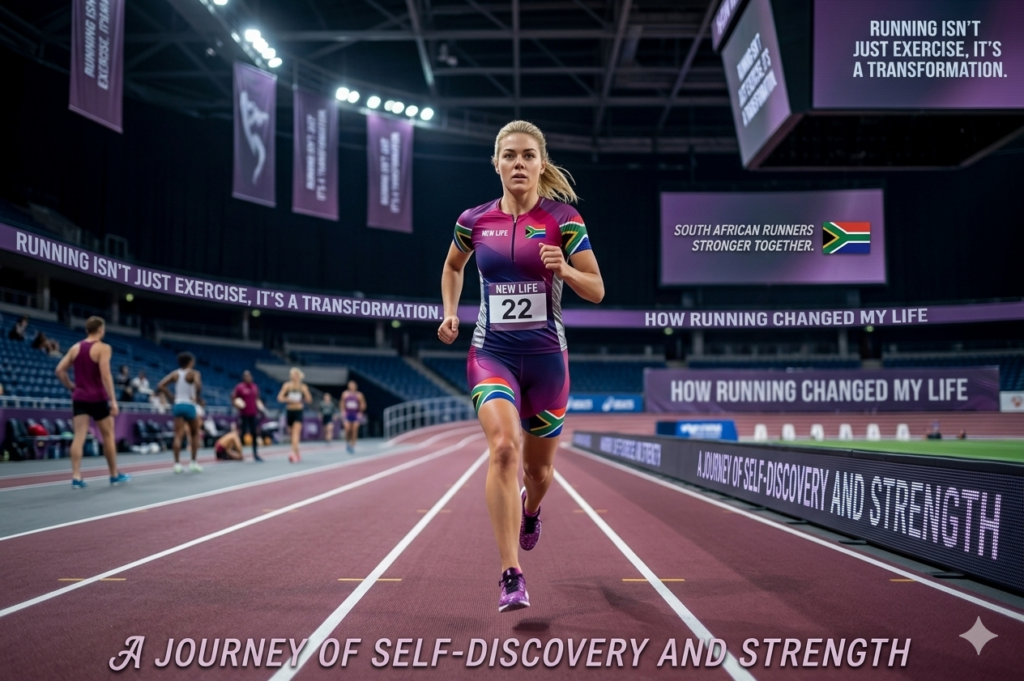
Your race-week readiness check
Tick these off as you prepare. Progress is saved in this browser.
0 of 6 ready
You have trained for the distance. Now come the questions nobody answered on your training plan: what to take to number collection, when to leave home, and how your family will find you afterward. A little planning makes your first race morning much calmer.
This guide covers those practical details. It takes you through your first 10K race morning step by step, from number collection to the start line, so the only thing you have to think about on the day is running. 🩷
Race week: number collection without the stress
Most South African road races have you collect your race number (your “bib”) a day or two before, at an expo, a sports shop or the race venue. Some larger races have no race-day collection, so check the times in your entry email and add them to your calendar now.
What to take with you:
- Your entry confirmation (the email or SMS with your race number on it).
- Your ID or driver’s license.
- Money for a temporary license if you don’t belong to a running club. Races run under Athletics South Africa (ASA) rules need either a permanent ASA license (club runners) or a temporary license bought for that race. The price varies by race (the Joburg 10K, for example, charges R60), so check your race’s info page.
- Collecting for a friend? You’ll usually need their entry confirmation, a copy of their ID, and a note from them authorizing you to collect on their behalf.
Before you walk away from the table, check that your name and distance are right and that the timing chip is on the bib (or in the bag). Ask where the toilets and bag drop will be on race morning. Future-you will be very grateful.
The night before: lay it all out
This is where race morning is won. Pack everything the night before so that at 4am you only have to get dressed and go.
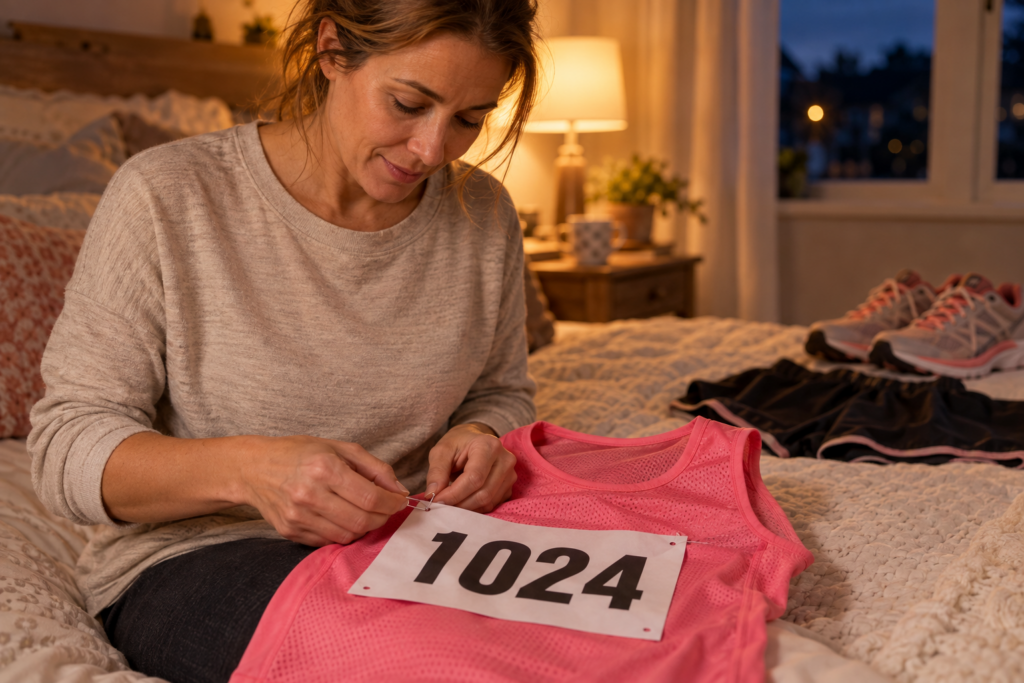
- Attach your race number and temporary licence exactly as your event’s instructions require.
- Lay out your whole outfit, including socks and sports bra. Nothing new on race day: not shoes, not shorts, not that cute top from the expo.
- Charge your watch and phone.
- Get breakfast ready: something you’ve eaten before a training run and know sits well.
- Set two alarms. Then go to bed early, even if you lie there buzzing. Barely sleeping the night before a race is completely normal. The sleep you had earlier in the week counts.
One more thing: many races don’t allow earphones, so check the rules before you build a race playlist you won’t be able to use.
Race morning timing: work backward from the gun
Don’t ask yourself “what time should I wake up?” Start at the gun and work backward instead. Here’s a realistic plan for a 06:30 start with a 30-minute drive:
| Time | What’s happening |
|---|---|
| 04:00 | Wake up, water, loo, coffee if it’s part of your normal routine |
| 04:15 | Breakfast, eaten before you leave |
| 04:30 | Leave home (30 min drive + 15 min buffer for traffic and road closures) |
| 05:15 | Park and walk to the start |
| 05:35 | Toilet queue (yes, 20 minutes) |
| 05:55 | Bag drop |
| 06:05 | Easy warm-up: a few minutes of walking and gentle jogging |
| 06:15 | Into your start pen |
| 06:30 | 🏁 Gun! |
Does 04:00 feel brutal for a 10K? A bit. But roads around big starts can close an hour or more before the gun, parking fills up fast, and toilet queues are a law of nature. Arriving early and bored beats arriving late and panicking every single time.
🩷 Let the planner do the maths
My First Race Morning Kit sets your wake-up and departure times. Pop in your gun time and drive time, and it builds your timeline. It also has checklists for number collection, packing, parking, and your supporters, plus a button to copy the plan so you can paste it into WhatsApp. Use it on your phone or print it for the fridge.
What to bring to a 10K (and what to leave in the car)
Keep it practical. Check the official water-point locations, weather, and expected time on the course before deciding what to carry. Use a drinking plan you have practiced in training.
- Phone and car keys. Clip the keys to something or zip them into a pocket.
- Cash for parking and the car guard.
- Tissues or a bit of loo roll. Trust me on this one.
- An old, warm top to wear in the start pen, and hand it to a supporter or place it in an official clothing collection if the organizer provides one.
- Sunscreen, lip balm and anti-chafe, all applied before you leave home.
- Dry clothes and a snack for after, left in the car or with your people.
Parking: sort it before race morning
Look up the race’s road-closure notice and parking info during race week, not at 5am in the dark. Save the parking spot as a pin on your map, find out how long the walk to the start is, and take a photo of where you parked: the pole number, the row, or a landmark. It is one less thing to remember after the finish.
Your supporters: make a meeting plan (phones die)
Having your people out on the route is the best feeling. Finding them afterward in a crowd of thousands, with networks jammed and your phone on 4%, is not. Agree on these before you leave home:
- Where they’ll watch. Choose an accessible spot on the published route. Check that they can get from there to your meeting point without crossing closed roads or the race course.
- What you’re wearing. A bright cap or top is easy to spot from a distance.
- Your rough finish time. Gun time plus your expected pace times 10, plus a few minutes to cross the start line if you’re near the back.
- A fixed meeting landmark: a specific tree, gate, or sign, NOT “by the finish”.
- A back-up plan: “If we can’t find each other, we meet at the car at 08:15.”
In the start pen: breathe
Stand in your seeded pen. If you’re unsure, stand towards the back, because it’s far more fun to pass people than to be swept along too fast. When the gun goes off, it might take a few minutes before you even cross the start mat, and that’s fine. Some events publish net (mat-to-mat) times, while official results, prizes, or cut-offs may use gun time. Check your event’s timing rules.
Then do the one thing almost every first-timer forgets: start slower than you think you should. The adrenaline will lie to you for the first two kilometers. Settle in, high-five a few kids, say thank you at the water tables, and save something for the last stretch.
You’ve done the hard part already: all those training runs nobody saw. Race morning is just the bit where you get a medal for it.
Final thoughts
Your first 10K race doesn’t need to be perfect. It needs a plan, a pinned-on number, and a bit of courage. Everything in this guide is about taking the guesswork out of the morning, so that when you’re standing in that start pen with your heart going a hundred miles an hour, it’s excitement you feel, not panic.
Running your first one soon? Tell me which race in the comments. I’d love to cheer you on. 🩷

🩷The Endurance Diaries🩷
Official rules to check before race day
Licence prices and collection requirements vary. Joburg 10K entry information is one organiser example, checked on 1 October 2026. Always use the current information for your own event.