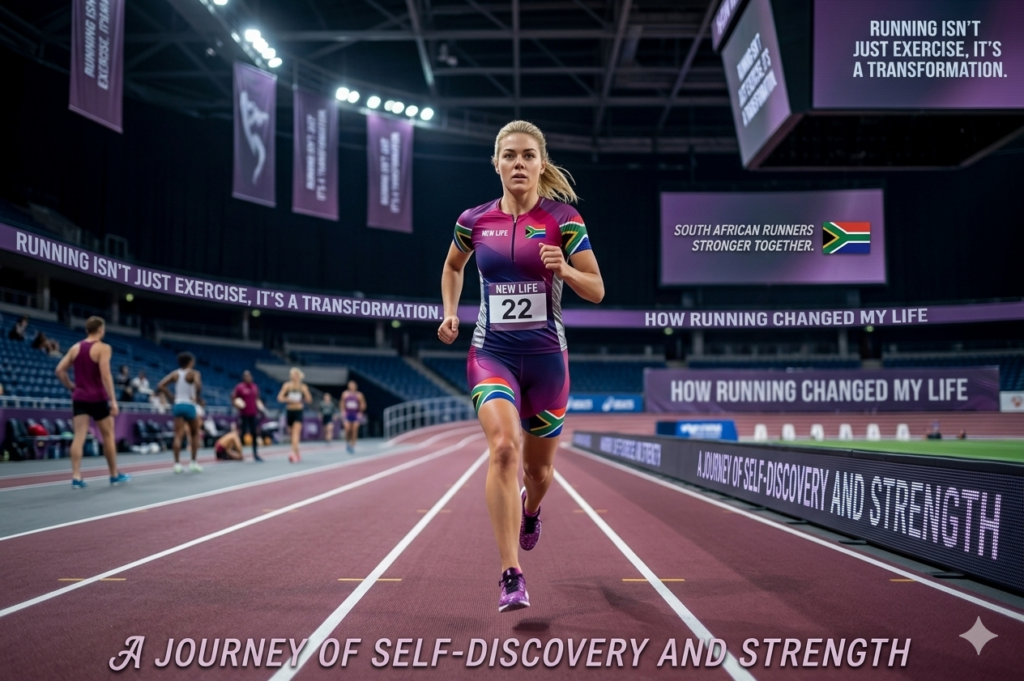
There’s a particular kind of confusion that arrives somewhere in your forties. 🤔
The training that used to work stops working. You’re sleeping badly for no obvious reason. Your heart rate is higher on the same effort. You’re more tired than the session deserves. Recovery takes days instead of hours. And the first thing you think — because it’s what we’re all trained to think — is that you’ve simply let yourself go.
You probably haven’t. You might just be perimenopausal.
And here’s what frustrates me: almost everything written about this is American or British. Lovely articles, genuinely useful, and then they tell you to speak to your provider about your insurance coverage, and you sit there in Middelburg thinking — right, but what do I actually do? 🇿🇦
Why I ended up writing about this
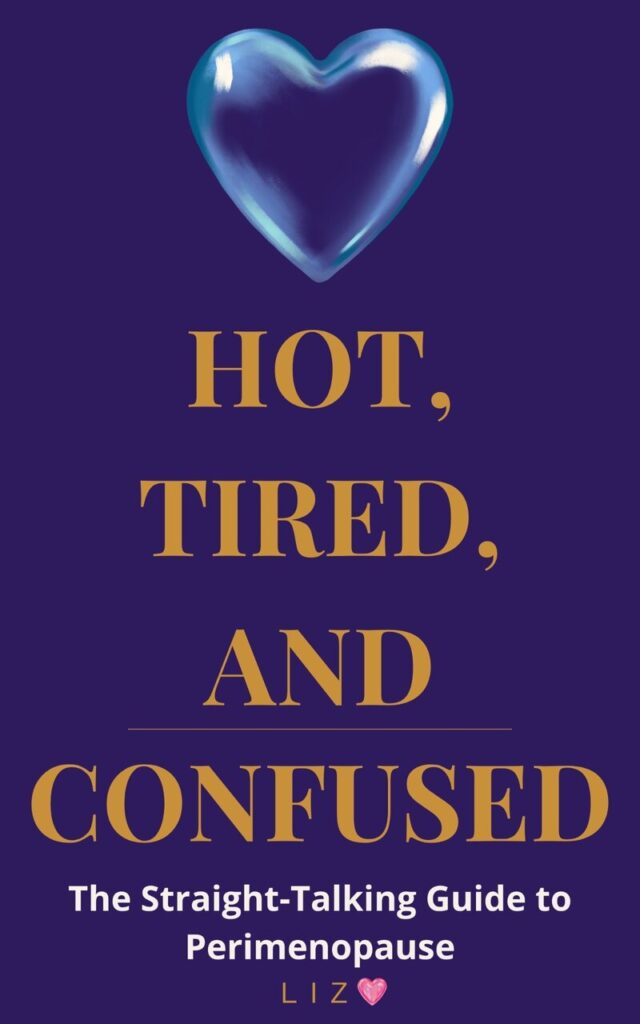
I wrote a book about perimenopause because I needed one and it didn’t exist. 📖
When it arrived in my own life — the broken sleep, the brain fog, the moods that turned up without warning, the weight that turned up without invitation — everything I could find was either clinical and cold, or vague and useless. So I spent months in the research literature until I actually understood what was happening and what to do about it. That became Hot, Tired, and Confused.
This article is the training-specific corner of that, because it’s the bit that hit me hardest as someone who rides and runs.
A quick honesty note before we go on: I’m a writer and an athlete, not a doctor. So I won’t tell you what to take, whether HRT is right for you, or what your symptoms mean — those are conversations for a qualified doctor who knows your history. What I can do is tell you what commonly changes, what the research actually says about training through it, and where to find proper help in South Africa. That last bit is the part nobody writes for us.
What perimenopause actually is
Menopause is a single day — twelve months after your last period. Everything leading up to it is perimenopause, and that stretch commonly runs for several years. For many women it starts in the early forties, sometimes sooner.
During that time your oestrogen doesn’t decline in a tidy line. It fluctuates — up, down, unpredictably. That’s why symptoms come and go and why you can have a brilliant training month followed by an inexplicably flat one.
The bit that catches most active women out: you can still be having regular periods and be well into perimenopause. A lot of us assume nothing is happening until our cycle changes. It doesn’t work like that.
What tends to change in training
Not a diagnostic list — just the things active women in this stage commonly report:
- Recovery takes longer. The session you used to bounce back from in a day now needs two or three.
- Sleep gets unreliable. Waking at 3 am wide awake and vaguely anxious is extremely common, and it wrecks recovery.
- Heat feels worse. Temperature regulation shifts, so the same ride feels hotter and harder.
- Strength quietly slips. Oestrogen helps protect muscle and bone. As it drops, that protection thins.
- Body composition changes even when nothing about your training or eating has.
- Motivation goes flat in a way that doesn’t feel like normal tiredness.
Read that list again and notice how easily every single item could be filed under “I’m just not trying hard enough”. That’s the trap. 😔
You’re not losing your discipline. Your body has changed the terms of the arrangement without telling you.
The uncomfortable part: more isn’t the answer
Our instinct, when fitness slips, is to train more. Add kilometres. Add another Zwift session. Push harder.
The research on women in the menopause transition points fairly firmly the other way. Dr Stacy Sims — probably the most-cited researcher in this space — argues that piling on moderate-intensity volume tends to backfire for peri- and post-menopausal women, because it lifts baseline stress hormones without delivering much adaptation in return.
What she points to instead is roughly this shape:
- Lift heavy things, properly. Not light weights for high reps — actual resistance training. This is the single biggest lever, because it directly defends the muscle and bone that falling oestrogen stops protecting.
- Add short, genuinely hard efforts. Sprint-type intervals measured in seconds, not minutes.
- Eat more protein, and eat it sooner. Sims’s work suggests women in this stage become less responsive to both food and training stimulus, so the protein that used to be sufficient no longer is — particularly after a session.
- Don’t train fasted. Riding on empty adds stress at exactly the point your system is least able to absorb it.
- Protect sleep like it’s training. Because functionally it is.
If you want the detail properly, straight from the source rather than filtered through me, her site is drstacysims.com. I’d genuinely rather you read her than take my summary as gospel.
I’ll be honest — this is the part I found hardest to accept. “Do less of the thing you love, do more of the thing in the gym you’ve been avoiding” is not the advice anyone wants. 😅
Where to get proper help in South Africa 🇿🇦
This is the section the overseas articles can’t write for you.
Start with the South African Menopause Society. SAMS is a medical association of South African doctors and specialists focused on midlife women’s health — gynaecologists, GPs, physios, dietitians and psychologists. Their site is menopause.co.za, and it’s the most useful local starting point I’ve found. SA-specific, medically credible, not selling you a supplement.
Talk to your GP — and be specific. Go in with a written list: what’s changed, how long it’s been going on, how it affects your sleep and training. “I’m tired” is easy to wave off. “I’ve been waking at 3 am four nights a week for five months, my recovery has doubled, and my resting heart rate is up six beats” is not.
If you’re dismissed, get another opinion. Being told you’re too young, or that this is simply what happens, is not a diagnosis. Plenty of South African women get brushed off the first time. You’re allowed to ask again, and you’re allowed to ask someone else.
Check what your medical aid actually covers before the appointment — consultations, bloods, and any treatment. Ask the scheme directly rather than assuming. It’s a tedious phone call that saves a nasty surprise.
Ask about bone density. Falling oestrogen affects bone, and runners and cyclists aren’t automatically protected — cycling in particular isn’t weight-bearing. Worth raising, especially if there’s osteoporosis in your family.
What I’d actually change first
If all of this feels like a lot, start here. Three things, in order:
- Add two proper strength sessions a week. Not an add-on when you have time. Actual scheduled sessions. Start light enough to learn the movements — form first, load later.
- Eat protein after every session, reasonably soon afterwards. Not a vague intention. An actual thing you’ve planned.
- Write down what’s happening — sleep, mood, energy, sessions, cycle. Six weeks of that turns a vague “I feel off” into something your doctor can work with, and it’s the difference between being taken seriously and being told to try yoga.
📝 Track what’s actually happening
Six weeks of written notes — sleep, energy, sessions, how you felt — is the most useful thing you can walk into a doctor’s appointment holding.
The Perimenopause Training Tracker was built on exactly this idea: train with your hormones rather than against them. It’s designed around a menstrual cycle, so it works best in early perimenopause while there’s still a rhythm to follow — and it’ll show you the pattern long before you’d spot it on your own.
The bit I actually want you to take away
This is not the end of your endurance life. It’s genuinely not.
Women race, ride, run and get stronger right through this transition and well past it. What changes is the method, not the ceiling. The training that worked at 30 stops working at 45, and the honest response is to change the training — not to quietly conclude that you’re finished.
What I’d really like is for fewer women to spend two or three years assuming they’ve simply gone soft. That’s the actual cost of nobody talking about this properly. Not the symptoms — the silence around them, and the self-blame that grows in it.
The training changes. You don’t have to.
If any of this sounds like your last year, please go and talk to a doctor. Not because something is wrong with you — but because you deserve an actual answer rather than another six months of wondering. 🩷
📖 Want the whole thing, not just the training bit?
This article covers the training side. My book covers all of it — the sleep, the brain fog, the moods, the weight, and what the research actually says about each one. Accurate, practical, and written the way you’d explain it to a friend you trusted. 160 pages, no vague answers.
Hot, Tired, and Confused: The Straight-Talking Guide to Perimenopause
Kindle · R189 · free on Kindle Unlimited
This article is general information from a fellow athlete and writer, not medical advice. Perimenopause symptoms overlap with several other conditions — including thyroid problems, anaemia and under-fuelling — which is exactly why a proper medical opinion matters rather than self-diagnosis from a blog or a book. Please see a qualified doctor.

🩷The Endurance Diaries🩷