I got dropped in the last 3km of a TTT, which is basically Zwift’s way of saying, “Thank you for your service, please collect your emotional damage at the exit.”
There I was, hanging onto the team, trying to look calm while my legs were quietly filing a labour complaint. Then the final few kilometres arrived, and the elastic snapped. Not a dramatic explosion. More like a sad little balloon noise from somewhere deep inside my quads.
The result: 24th place. A finish time of 42:44, sitting four minutes and eighteen seconds behind the winner. My legs had answered in lowercase when the race asked for capital letters.
My first thought was: My endurance is weak.
But after looking at the Zwift ride data, I do not think that is the full story. I probably wasn’t dropped because I have “bad endurance” in the general sense. The problem was more specific, more annoying, and very fixable.
What the screenshots actually show
The ride was a proper spicy little TTT sandwich:
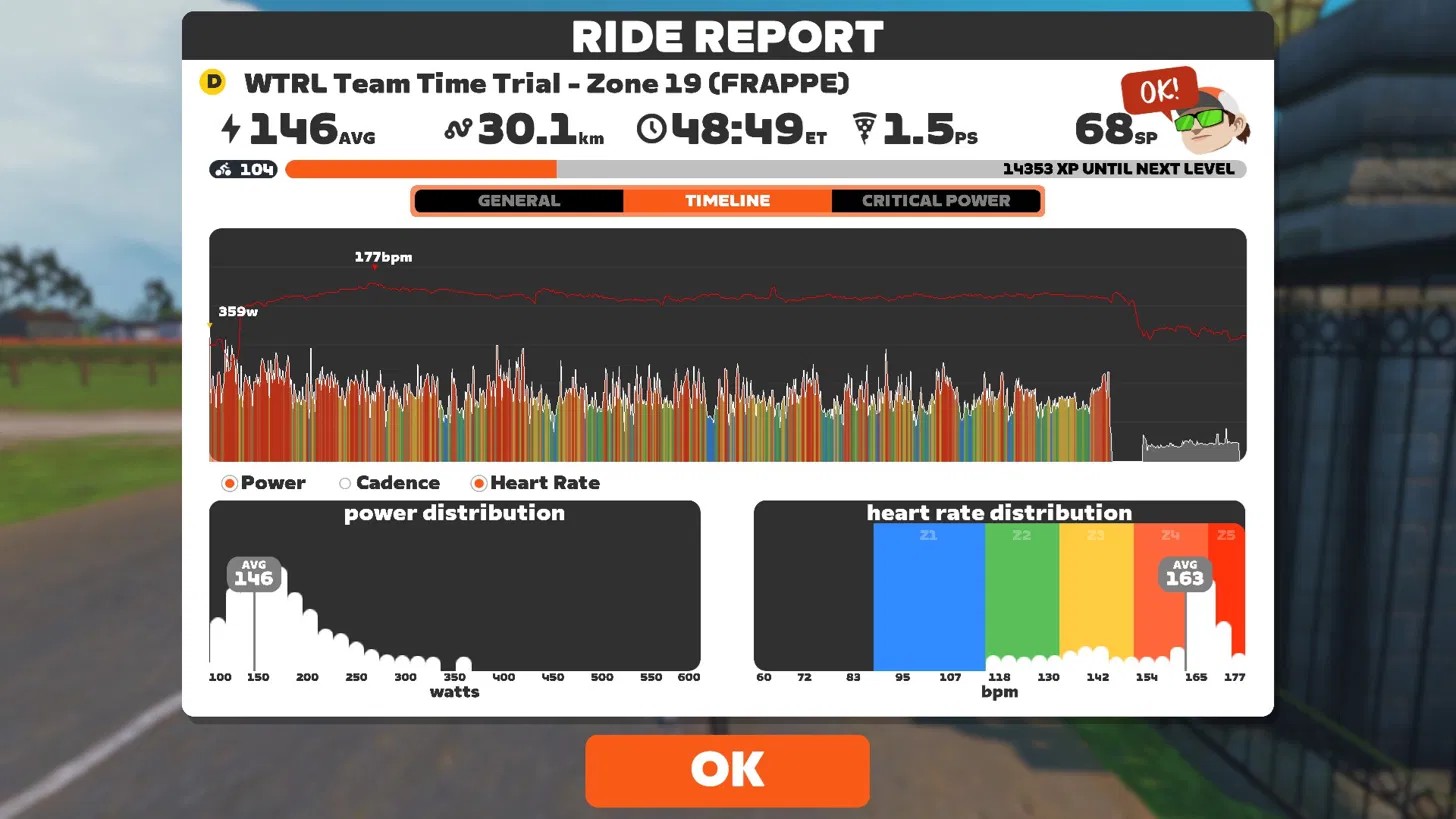
- Duration: 48:49
- Distance: 30.12km
- Average power: 146W
- Average heart rate: 163bpm · Max 177bpm
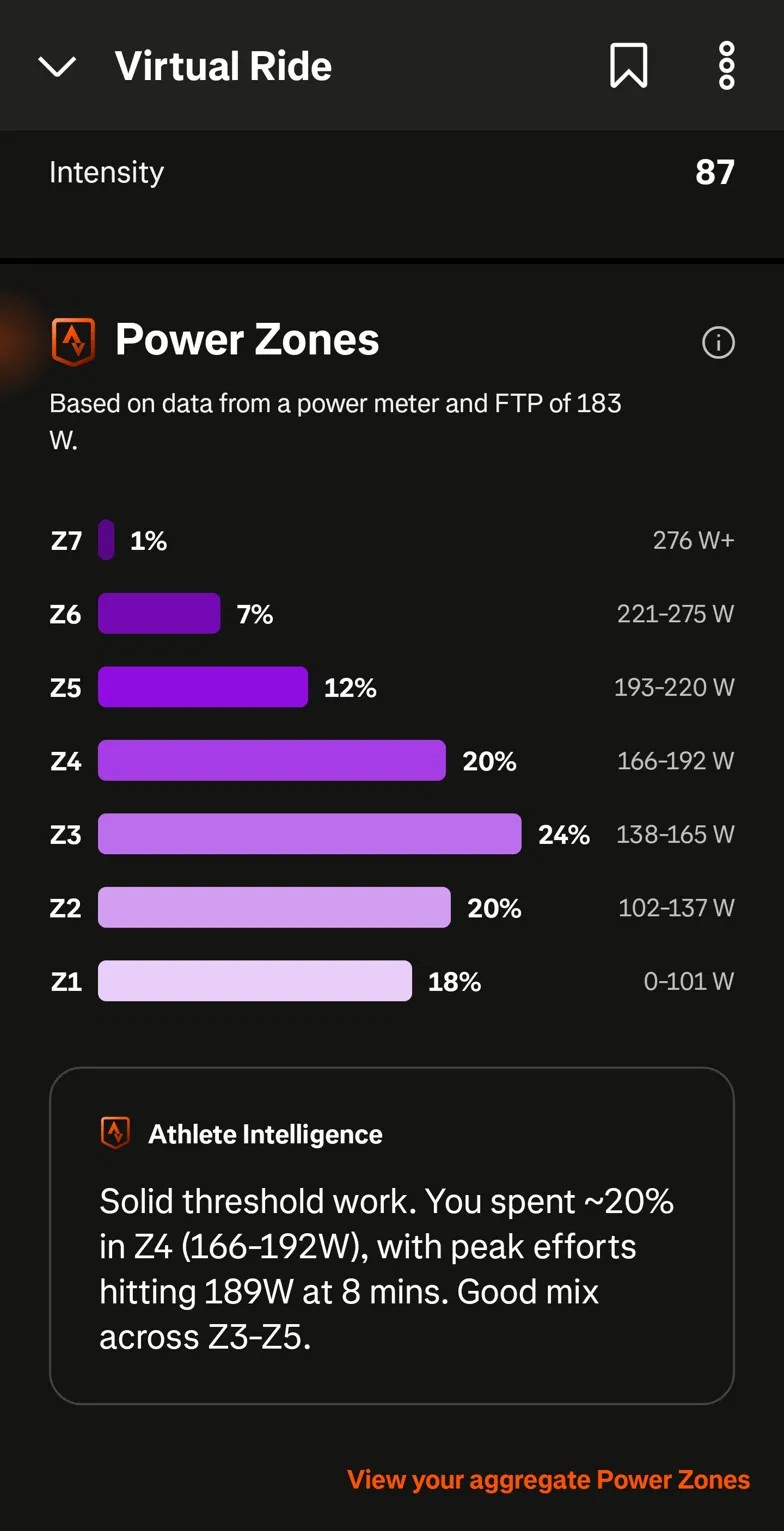
- FTP: around 181–183W
- Intensity: 87
- Power zones: 24% in Z3 · 20% in Z4 · 12% in Z5 · peak effort 189W at 8 minutes
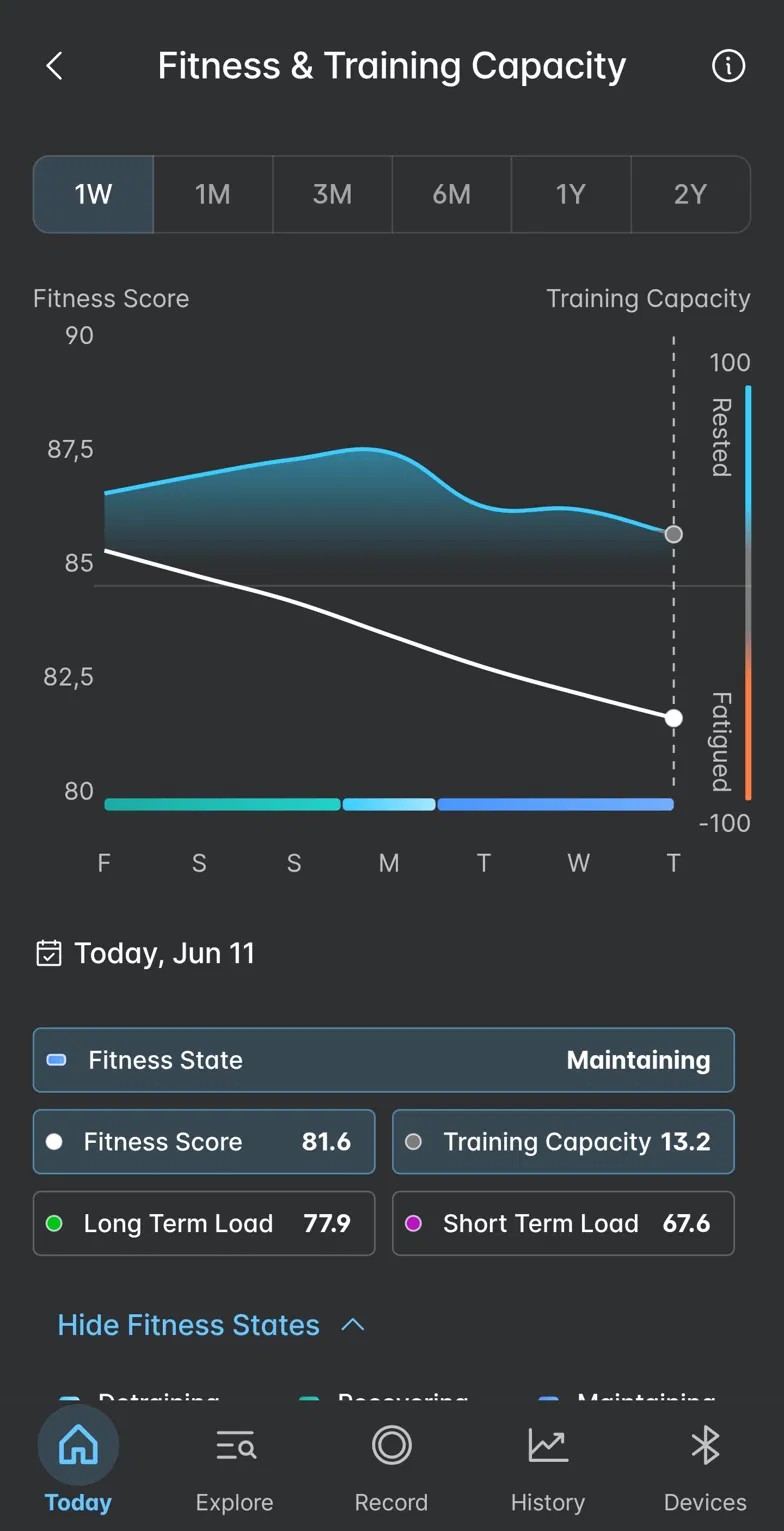
- Fitness state: Maintaining, but trending downward (-4.3 for the week)
- Training capacity: 13.2 — sitting close to the fatigue side
That tells a very different story from “I am just not fit enough.”
The ride was not a gentle coffee spin through France. It was nearly 50 minutes of controlled suffering, with threshold work, VO2 spikes, changes in pace, and the constant pressure of not leaving little gaps in the draft. From the outside, a TTT looks smooth. Inside the legs, it is considerably less dignified.
So the real issue was probably this:
I faded because the TTT required sustained high aerobic power and repeated threshold surges while I was already carrying fatigue.
The real problem was not “endurance”. It was fatigue resistance.
There is normal endurance, and then there is TTT endurance. Normal endurance is: Can I ride for a long time? TTT endurance is: can I ride hard for a long time, recover while still riding hard, then respond when the team suddenly surges because someone sneezed near the front?
That is a very specific fitness beastie.
In my case, the screenshots suggest I need to improve three things.
1. Fatigue resistance at 85–95% FTP
I can ride at sweet spot and threshold, but the question is whether I can still hold that power after 35–45 minutes, when the legs have gone from “we are athletes” to “we are cooked pasta with cleats.”
For an FTP around 183W, the magic zone for this work is roughly 160–170W. Not heroic. Not dramatic. Just steady, uncomfortable, and controlled.
2. Surge recovery
TTTs are not perfectly steady. Every climb, corner, rotation, bridge, tiny gap or speed change asks for a little power spike. One spike is fine. Ten spikes are rude. Thirty spikes become a tiny tax office inside your legs, collecting interest.
The final 3km usually exposes this. It is not always the final 3km that breaks you. It is the 45 minutes of tiny payments before that.
3. Pacing and positioning efficiency
In a TTT, being brave is not the same as being useful. If I pull too hard, rotate too often, or sit just slightly out of the draft, I burn matches early, and then the last few kilometres arrive wearing little sunglasses and carrying a clipboard.
The goal is not to prove strength in the first 10 minutes. The goal is to still have strength when everyone else is bargaining with their ancestors near the finish.
My 4-week fix for the final 3km problem
The goal is not simply “more endurance.” The goal is sharper than that:
I want to hold 160–170W comfortably for 40+ minutes, while still being able to respond to short 180–200W surges near the end.
That is the exact fitness that helps a rider survive the final 3km of a TTT without turning into a dropped breadcrumb.
Session 1: Sweet spot fatigue resistance
Goal: become stronger at the exact intensity needed for TTTs.
- Week 1: 3 × 12 minutes at 88–92% FTP, with 5 minutes easy between
- Week 2: 3 × 15 minutes at 88–92% FTP
- Week 3: 2 × 20 minutes at 88–92% FTP
- Week 4: 1 × 35–40 minutes at 85–90% FTP
For an FTP around 183W, this means roughly 160–168W. It should feel controlled, not theatrical. No need to ride like you are being chased by a tax auditor on a TT bike.
Session 2: Over-under intervals
Goal: survive TTT surges without blowing up.
Do 4 × 8 minutes. Each 8-minute block looks like this:
- 1 minute at 95–100% FTP
- 1 minute at 85–90% FTP
- Repeat until the 8 minutes are done
- Rest 5 minutes easy between blocks
For an FTP around 183W:
- High part: roughly 174–183W
- Low part: roughly 155–165W
This teaches the body to clear fatigue while still riding hard, which is basically the entire personality of a TTT.
Session 3: Long easy endurance ride
Goal: build the aerobic base that supports the final 10 minutes.
Ride 75–120 minutes in Z2. For me, that likely means around 100–135W, depending on heart rate and how the legs feel.
The important part: this ride must feel almost too easy. Not “secretly a race.” Not “oops, I chased a jersey.” Easy. Boring. Lovely. Aerobic glitter glue.
Indoor cycling should be hard, not confusing
If you are building your Zwift setup, planning your training corner, or just trying to make indoor riding feel less like punishment in a laundry room, have a look at my shop resources.
Race-day TTT strategy: how not to donate your legs too early
Fitness matters, but TTT strategy matters just as much. You can have strong legs and still get dropped if you spend them like a person who just found a credit card on the road.
1. Do not pull above your sustainable power
With an FTP around 183W, most pulls should usually sit around 170–190W, depending on how long the pull is. Repeated pulls at 200W+ are expensive. They may feel manageable early, but they often send the invoice in the final 3km.
2. Shorten the pulls
Instead of trying to be strong and staying on the front too long, shorter pulls are smarter:
- 20–40 seconds on the front
- Rotate off smoothly
- Recover properly in the draft
A slightly weaker rider who rotates smoothly is more valuable than a heroic rider who overpulls and then disappears into the French countryside like a sad baguette.
3. Protect the first 10 minutes
The first third of the race should feel too controlled. That is not a failure. That is planning.
The mistake is feeling good early, pulling hard, and then discovering that the final 10 minutes have teeth.
4. Stay glued to the wheel
When I am not pulling, my job is recovery. Sit in the draft. Avoid micro-gaps. Do not let the wheel drift away and then chase it back like a panicked meerkat.
One small gap is manageable. Repeating that 20–30 times is what makes the final 3km feel like a tiny horror film.
Nutrition: the last 3km starts before the race
For a 50-minute TTT, I probably do not need a buffet on the bike. But I do need to start the event properly fuelled.
My Strava note showed roughly 63.6% carb use, which means this was a carb-demanding effort. Starting even slightly under-fuelled can absolutely cause that last 3 km fade.
2–3 hours before
Eat a carb-heavy meal that is low in fat and low in fibre. Simple options:
- Oats
- Banana
- Toast
- Rice
- Cereal
- Potatoes
15–30 minutes before
Take a small fast carb:
- Banana
- Gel
- Sports drink
- Dates
During the ride
For a 50-minute effort, water is usually fine. A carb drink can help if it sits well in the stomach. The goal is not to overcomplicate it. The goal is to avoid starting the race with the fuel light already blinking.
The weekly structure I would use
Because my training capacity was already leaning toward fatigue, adding more intensity is not the answer. Two hard sessions per week is enough.
- Monday: Rest or 30 minutes, very easy
- Tuesday: Sweet spot fatigue resistance
- Wednesday: Easy Z2, 45–60 minutes
- Thursday: Over-under intervals
- Friday: Rest or very easy spin
- Saturday: Long Z2 ride, 75–120 minutes
- Sunday: Optional easy ride or TTT skills practice
The key is to keep easy rides truly easy. No accidental race. No “just one sprint.” No sneaky little threshold goblin appearing halfway through the ride.
The final verdict
I do not think getting dropped in the final 3km means my endurance is hopeless. It means the TTT asked a very specific question, and my legs answered in lowercase.
The fix is not panic training. It is not adding five hard rides and hoping the body signs the permission slip. The fix is building fatigue resistance, improving surge recovery, pacing smarter, staying properly glued to the draft, and arriving at race day fresher.
The goal is not to survive the first 40 minutes. The goal is to still be useful when the final 3km knocks on the door.
Next time, I want to arrive at those last few kilometres with a little more battery, a little less panic, and legs that do not immediately open a resignation letter.
Enjoyed this one?
There is more where this came from – real training stories, Zwift lessons, running honesty and practical endurance notes from South Africa.
- Read more honest race and training stories
- Follow the messy middle of getting fitter, stronger and more consistent
- Send a message if something in this post sounded familiar

🩷The Endurance Diaries🩷