Indoor cycling has completely changed the way I train.
What used to sound like a boring backup plan for rainy days has somehow become a whole little universe of group rides, races, workouts, sweat, snacks, fan settings, charging cables and questionable decisions made while breathing through my eyelashes.
And then there is Zwift.
Zwift pulled me in quickly. As someone who loves cycling, I loved the idea of riding with friends, joining events, chasing goals and staying consistent, even when the weather, traffic or life said, “Not today, madam.”
But it was not all smooth spinning. I hit a plateau. My knee started complaining. My motivation wobbled. Eventually, I realised I needed more than random rides and good intentions. I needed structure, guidance and someone who could look at my training with a calmer brain than mine.
So I hired a coach.
This is what I have learnt so far about Zwift, indoor cycling, coaching, knee pain and building a training routine that actually works in real life.
Why Zwift Hooked Me So Quickly
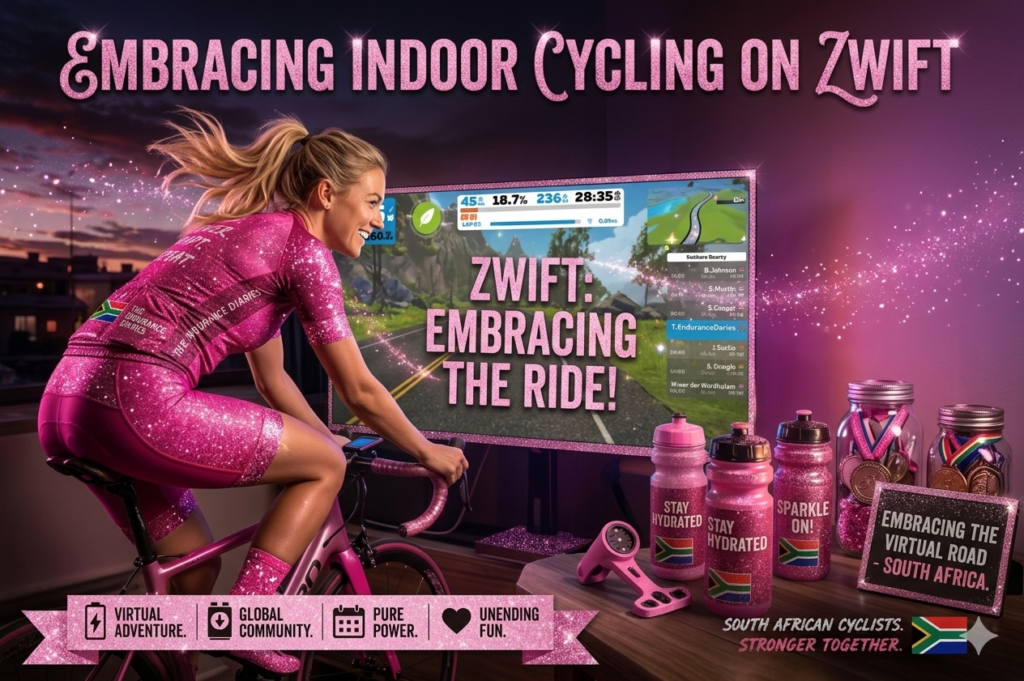
Zwift is not just indoor cycling. It feels more like stepping into a cycling game where your legs are the controller and your heart rate is the plot twist.
You can ride through virtual worlds, join group rides, enter races, complete structured workouts and train with people from all over the world without leaving your pain cave, spare room or very strategically arranged corner of the house.
For me, the biggest win was the community. Riding with others, even virtually, made training feel less lonely and much more motivating. There is something powerful about seeing other riders around you, even if you are technically suffering alone next to a fan and a bottle of water.
It gave me consistency. It gave me something to look forward to. And on the days when motivation was nowhere to be found, Zwift gave me just enough sparkle of competition to clip in anyway.
Indoor cycling stopped being “just training” and became something I genuinely wanted to show up for.
Getting Set Up Properly Made a Big Difference
One of the biggest changes for me was upgrading to a smart trainer. I use a Wahoo Kickr Core, and it made indoor riding feel much more realistic.
Instead of just pedalling against the same resistance, the trainer responds to the terrain. Climbs feel harder. Descents ease up. Workouts become more controlled. Suddenly, the virtual road feels a lot less imaginary.
A few small setup changes also made a surprisingly big difference:
- A proper space where the bike could stay ready.
- A strong fan, because indoor cycling turns you into a human kettle.
- Water within reach, not across the room like a cruel little joke.
- A towel nearby.
- Devices charged before the ride.
- A plan for nutrition before harder sessions.
None of those things sounds dramatic, but they matter. A good setup removes friction. And when training is easier to start, you are more likely to keep doing it.
Shop The Endurance Diaries gear
If this article helped, have a look at my online shop. It has endurance-inspired gear and everyday training favourites for Zwift rides, running days and coffee-fuelled comeback stories.
- Coffee mugs, bottles, towels and practical training accessories
- Running, cycling and endurance-inspired apparel
- South African checkout and delivery
- Secure PayFast payment through The Endurance Diaries website
- New products added as the shop grows
No pressure, no hard sell – just a small way to support the diary and bring a little sparkle to your next session.
Why I Decided to Hire a Coach
At first, I thought consistency alone would fix everything.
If I just rode more, surely I would get stronger. If I entered more events, surely I would improve. If I ignored the knee pain long enough, surely it would get bored and leave.
Spoiler: that is not how knees work.
Eventually, I reached a point where I was training, but not really progressing. I was working hard, but not always smart. My knee pain also made me nervous, because there is a big difference between normal training discomfort and a body part sending strongly worded emails.
Working with a coach gave me the structure I was missing:
- Personalised training: sessions that actually matched my goals and current fitness.
- Better technique: small changes that helped reduce unnecessary strain.
- Accountability: because skipping hard sessions is much easier when nobody is watching.
- Injury awareness: learning when to push, when to adjust and when to back off.
- Recovery guidance: understanding that rest is not laziness, it is part of the plan.
- Nutrition support: because training properly while under-fuelled is a recipe for grumpy legs.
Honestly, this was the turning point. The coach did not make the work easier, but the work finally made more sense.
Managing Knee Pain: What Actually Helped
Knee pain in cycling can happen for many reasons, and it is not something I think we should simply “push through” and hope for the best. Pain is information. Sometimes it is a whisper. Sometimes it is a tiny marching band with cymbals.
I am not a medical professional, so this is not medical advice. It is simply what helped me. If the pain is sharp, persistent, or worsening, it is worth speaking to a doctor, physiotherapist, or qualified bike fitter.
1. Bike fit is everything
Small adjustments can make a huge difference. I learnt that indoor cycling is not just about the trainer and the screen. Your position on the bike matters.
- Saddle height
- Saddle position
- Cleat alignment
- Pedalling technique
When something is slightly off, your knees may notice long before your brain does.
2. Strength training matters
Strength work helped me feel more stable and supported on the bike. The goal was not to become a gym goblin overnight. It was to build the muscles that properly carry the load.
- Squats
- Lunges
- Leg press
- Glute-focused work
- Core stability
3. Mobility and stretching helped more than I expected
I used to think stretching was the part you did when you wanted to look responsible after training. But tight muscles can set off a grumpy little chain reaction.
I focused mainly on:
- Quads
- Hamstrings
- Hip flexors
- Glutes
- Calves
4. Recovery is not optional
This was a big lesson. More training is not always better training. Sometimes the smartest thing you can do is let your body absorb the work.
- Rest days
- Foam rolling
- Easy rides when needed
- Ice after long or painful rides when appropriate
- Enough sleep
5. Listening to my body became part of training
This sounds obvious, but it is surprisingly hard when you are motivated. It is easy to confuse discipline with stubbornness.
I had to learn that backing off does not mean failing. Sometimes it means protecting the next ride, the next week and the bigger goal.
What Changed Once I Had Structure
The biggest change was that training stopped feeling random.
Instead of jumping from one hard ride to another and hoping improvement would magically appear, I started understanding why each session was there. Some rides were meant to build endurance. Some were meant to challenge me. Some were meant to feel almost too easy, which is still a concept my ambitious little cycling brain argues with.
Zwift gave me the platform. Coaching gave me the roadmap. Strength, mobility and recovery helped keep the wheels attached to the wagon.
And knee pain? It taught me to pay attention. Not panic, not ignore, just pay attention.
Final Thoughts
Zwift completely changed how I approach training. It made indoor cycling fun, social and consistent. But adding a coach turned it into a proper system, not just a collection of random rides and sweaty screenshots.
If you are struggling with progress, dealing with niggles or feeling stuck, it may be worth looking at your setup, your training structure and whether you need expert guidance.
Sometimes the breakthrough is not about training harder. Sometimes it is about training smarter, recovering better and finally listening when your knee starts writing complaint letters.
Zwift got me riding. Coaching helped me understand the ride. My knee reminded me that bodies are not machines, even when the trainer is smart.
More Zwift, cycling and training lessons coming soon.
Shop The Endurance Diaries gear
If this article helped, have a look at my online shop. It has endurance-inspired gear and everyday training favourites for Zwift rides, running days and coffee-fuelled comeback stories.
- Coffee mugs, bottles, towels and practical training accessories
- Running, cycling and endurance-inspired apparel
- South African checkout and delivery
- Secure PayFast payment through The Endurance Diaries website
- New products added as the shop grows
No pressure, no hard sell – just a small way to support the diary and bring a little sparkle to your next session.
If this helped, I would love to hear from you. Drop a comment, tag me on Instagram, or send me an email at my.endurance.diaries@gmail.com. You can also read more stories on the blog.

🩷The Endurance Diaries🩷