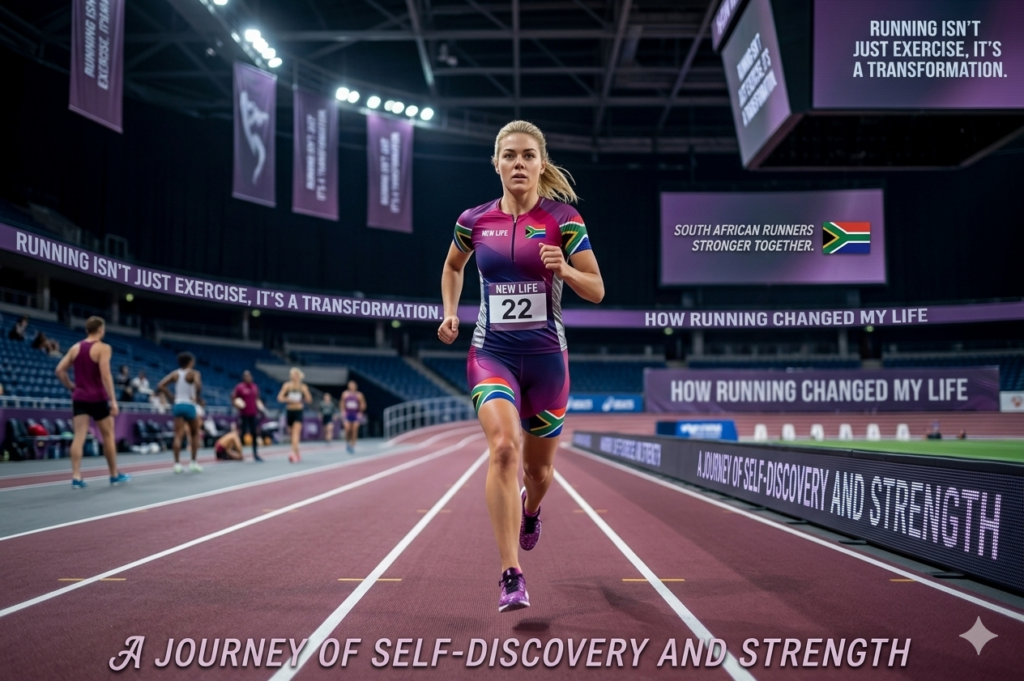
Late in a long run, the same pace can start costing a lot more. Your breathing changes, your stride feels heavier, and the watch becomes increasingly annoying. That is where durability matters: how well your performance-related abilities hold up as fatigue builds.
Recent research gives regular long runs a useful place in that conversation. But it does not prove that 90 minutes is a special switch every runner needs to flip.
What the long-run study found
In Zanini and colleagues’ 2026 study, 26 well-trained men were matched for 10 km performance, with an average time of around 39 minutes. Thirteen regularly ran for at least 90 minutes; the other thirteen kept every run below 70 minutes.
During a 90-minute laboratory run at a lactate-threshold speed, oxygen cost increased by 3.1% in the long-run group and 6.0% in the shorter-run group. A greater oxygen cost at the same speed means poorer running economy. Those percentages describe oxygen cost, not an equivalent loss of race speed.
Long-run duration had a stronger association with economy durability than weekly volume. However, this was a comparison of existing training habits, not an experiment assigning different long runs. It cannot establish that extending one run causes the benefit, or that a long run should replace consistent weekly training.
The RunnersConnect article highlighted this research. Reading the original study helps keep the practical message in proportion: the association is promising; a universal 90-minute prescription is not established.
Ninety minutes is a possible training target, not a pass-or-fail test of endurance. The useful long run is the one that fits your current fitness and leaves you able to train again.
Strength training adds a different piece
A separate 2025 strength-training trial randomly assigned 28 well-trained men to running alone or running plus heavy strength work and plyometrics twice weekly for ten weeks. The prolonged test was in the heavy-intensity domain, just above the first lactate threshold; it was not a prescription to run for 90 minutes at your usual hard-threshold pace.
At 90 minutes, oxygen cost improved by 2.1% in the strength group versus a 0.6% worsening in controls. In the subsequent hard treadmill test, time to exhaustion increased by 35%, compared with an 8% decrease in controls. That does not mean 35% faster racing. It is evidence of better performance in a particular laboratory test after fatigue.
How to use this in a normal training week
- Build from what you can repeat. If an hour is comfortable, a small extension may be a sensible next step. Repeat that duration until recovery is manageable, then add more. There is no need to reach 90 minutes immediately, or at all for every goal.
- Keep most long runs conversational. The studies’ testing speeds are not instructions for your Sunday run. Choose duration and intensity around your event, training history, and the rest of the week.
- Add strength progressively. Start with controlled squats, hinges, step-ups and calf work. Learn technique before increasing load; add jumping drills only when ready. A coach or biokineticist can help fit this around running.
- Treat a faster finish as optional. For an experienced runner, a short, controlled finish at an appropriate endurance-race pace can help practice pacing while tired. It counts as harder training; do not add it automatically alongside a longer run and new gym work.
For sessions lasting around 1–2.5 hours, Australian Institute of Sport guidance gives a carbohydrate target of 30–60 g per hour, adjusted to the session and gut tolerance. Practice your fuelling and count carbohydrates from both drinks and food. A long run is a chance to learn what sits well, not a reason to deliberately run empty.
What about women and cyclists?
Both main studies tested men. A small 2026 study of 11 women and 11 men found less deterioration in uphill time-trial speed among women after three hours, but running economy worsened similarly in both groups. The findings are interesting, but not proof that every woman is more fatigue-resistant.
For cyclists, the practical question is similar: can you still produce the effort you need late in a ride? These running studies do not establish a cycling dose, and riding cannot fully replace the demands of running. Choose extra aerobic work that supports your main event and fits your recovery.
🚴♀️ Add aerobic time without extra impact
If you want to build endurance without piling more kilometers onto your joints, indoor cycling is a great cross-training tool. The Indoor Cycling Starter Pack helps you set up your space and routine the easy way.
Your next step
Pick one manageable change for the next few weeks. Track duration, effort, soreness, and how the following sessions feel. Persistent pain or worsening recovery is a reason to reassess the load, not force another ten minutes. Consistency gives the plan a chance to work. 🩷

🩷The Endurance Diaries🩷